Pineville standing water cleanup
Water Extraction in Pineville
The puddle is only the starting point. Extraction removes accessible water while the inspection follows its spread beneath floor edges, into nearby trim and across connected rooms that may look less obviously affected.
(888) 578-4720Arrange removal of the pooled water- Source identification
- Controlled extraction
- Wet perimeter checks
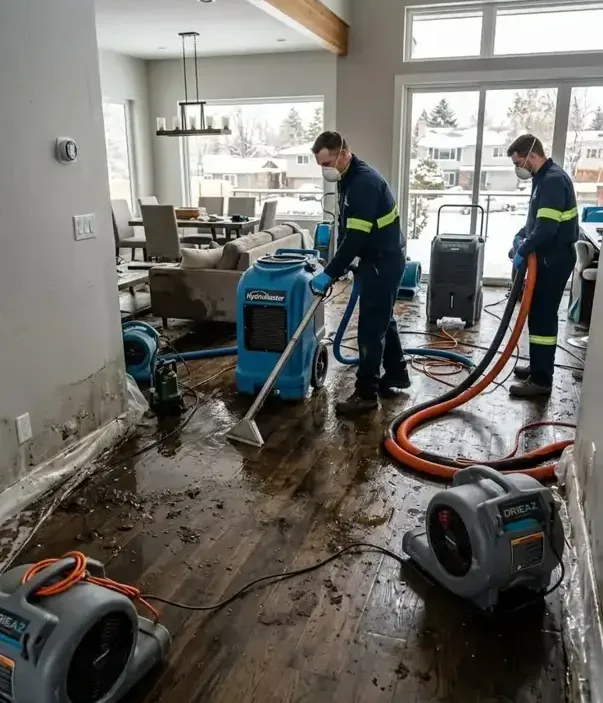
First steps
First steps for water extraction
- Establish a safe working areaThe room is checked for electrical exposure, ceiling instability and water contamination before equipment enters. Dry approaches and a controlled hose route protect adjoining spaces during removal.
- Document the starting water spreadThe inspection records the source, visible extent and affected floor materials. Photographs and initial readings preserve conditions before suction changes the appearance of the wet room.
- Extract from suitable surfacesEquipment selection follows water depth, accessibility and the surface involved. Accessible pools and saturated recoverable coverings receive focused removal while damaged layers are identified for separate handling.
- Inspect the remaining wet assemblyAfter pickup, floor edges and adjacent finishes receive closer moisture checks. Those findings determine whether retained materials need drying access or whether affected backing requires selective removal.
Planning costs
What does water extraction cost in Pineville, NC?
Water extraction in Pineville varies with water depth, floor covering and the route needed for equipment. Contamination and moisture beneath accessible surfaces can expand the scope beyond the initial pickup of pooled water.
One accessible room
$800 to $1,500- Pooled water within an accessible space
- Focused suction across the affected surface
- Initial checks around the wet perimeter
Several wet rooms
$1,500 to $3,000- Water tracked through connected interior rooms
- Different floor coverings requiring separate attention
- More extensive extraction and material assessment
Deep or contaminated water
$3,000 to $4,500+- Deeper accumulation or contaminated water conditions
- Controlled removal with additional handling precautions
- Broader access and affected material decisions
Estimate only. The water damage cost calculator shows how wet area, contamination and material choices affect the planning range.
Measured work
The water extraction process
Source and exposure
The first assessment identifies the likely origin and water condition, then sets boundaries for safe work and protection of unaffected interior areas.
Water pickup
Pumping or suction removes accessible accumulation using equipment suited to the depth and flooring. The room's changing condition determines the extraction sequence.
Moisture follow through
Checks continue along baseboards, transitions and floor backing after visible water disappears. Concealed wet areas are recorded for access and drying decisions.
Recovery scope
The remaining work identifies retained materials, necessary removals and drying needs. Documentation connects the completed extraction with the next stage of interior recovery.
A room can lose its visible puddle and still hold considerable moisture along the wall base. Extraction in Pineville therefore includes attention to where the water stopped, which materials absorbed it and whether an adjoining space received flow under a doorway or partition.
Separate plumbing discharge from outdoor runoff
Pineville Public Works manages rainfall runoff through its Storm Water division. A wet interior nevertheless needs its own source assessment. A supply pipe, appliance discharge and water entering from outdoors create different exposure conditions, even when each leaves a similar looking pool across the floor.
- Record the water source and whether discharge continues during the initial inspection.
- Identify soft flooring and absorbent backing that may retain water after suction.
- Check thresholds for movement into rooms that appear dry from the entrance.
- Preserve safe equipment access without routing hoses across unstable or contaminated areas.
Trace the edges before choosing equipment
Main Street, Dorman Road and Downs Road are state maintained roads named by the town. At a property along these corridors, the extraction scope follows the actual rooms and floor assembly. A wood threshold needs different inspection access from carpet over padding or a tiled entrance.
Standing water beside energized appliances, outlets or damaged ceilings makes ordinary entry unsafe. Occupants should remain in a dry area while qualified personnel establish electrical safety and a workable route. A household vacuum is unsuitable for water pickup. When outdoor water or waste is involved, moving belongings through clean rooms can spread the contamination beyond the original wet area.
Continue beyond the last visible puddle
Extraction prepares the space for material assessment and measured drying. It does not replace those steps. Moisture at carpet seams, beneath floor coverings or behind baseboards can require further access. The written scope should distinguish water pickup from any material removal and equipment needed to finish drying the assembly.
Coverage
Water extraction in Pineville
Assessments cover Pineville properties with standing water in occupied rooms, utility spaces or business interiors. The caller's description should identify the wet floor covering, suspected source and safe entrance so equipment access can be considered.
The same service nearby: water extraction in Cornelius, Mint Hill, Stanley.
Related services
Related water damage services in Pineville
01Can carpet stay after the water is extracted?
Retention depends on contamination, backing condition and how the entire assembly responds to drying. After extraction, the technician checks padding and the floor underneath for trapped water, deterioration and contamination before recommending which layers can remain.
02Does clear water require a source check?
Appearance is insufficient to identify water condition. A supply release and runoff can look similar after pooling, so the original source and contact with affected materials shape the cleanup approach.
03What if the water returns after suction?
A continuing leak or concealed reservoir may still be feeding the room. The source and adjoining cavities need investigation before repeated extraction can lead to a stable drying condition.
04Are floor edges included in the assessment?
Water can move under trim and through transitions before the center of a room appears heavily soaked. Perimeter measurements help establish whether the affected area extends beyond visible pooling.
05Should rugs be moved before equipment arrives?
Only safely accessible, uncontaminated items should be considered for movement. Heavy wet rugs can transfer water or damage finishes beneath them, so handling may belong within the cleanup scope.
06What follows the water removal visit?
The next work depends on the remaining moisture map. Some materials need controlled drying, while damaged or contaminated layers require removal before the exposed structure can be treated appropriately.
24/7 water damage response
Arrange the next extraction step
Describe the wet flooring, the water's origin and any obstacles between the entrance and the affected area.