Cornelius, NC · Water damage response
Slab Leak Water Damage in Cornelius, NC
Damp flooring without a visible spill needs source testing before demolition. The restoration team provides 24/7 assessment of the wet slab and adjoining finishes, coordinating moisture checks with the plumbing repair and subsequent controlled drying.
(888) 578-4720Trace moisture under the floor- 24/7 buried-leak assessment
- Floor-assembly moisture mapping
- Repair and drying records
First steps
First steps for slab leak water damage
- Record the visible cluesOccupants should note a damp patch, warmth, staining or repeated moisture without drilling into the floor. These observations help the assessor choose testing locations.
- Arrange source identificationA plumber distinguishes a buried supply leak from a drain issue or another water source. The cleanup team should not infer the pipe location from a stain alone.
- Keep the area accessibleHousehold members can move dry lightweight contents away from the affected section when safe. Heavy furniture or unstable flooring should remain for professional handling.
- Delay new floor coveringsA dry-looking slab may still hold moisture beneath an adhesive or backing. The repair plan should wait for material testing rather than cover the evidence with a new finish.
Planning costs
What does slab leak water damage cost in Cornelius, NC?
Slab leak water damage cleanup often needs $1,500 to $7,000 for affected flooring and structural drying. The scope depends on trapped moisture, access openings and damaged finishes. Leak detection, pipe work and concrete repair require separate review.
Small exposed wet area
$1,500 to $3,000- Moisture map around a limited patch
- Accessible extraction and controlled drying
- Checks at adjoining wall bases
Floor layers affected
$3,000 to $5,000- Selective removal of wet backing
- Drying across connected flooring areas
- Material testing before new adhesive
Broad concealed spread
$5,000 to $7,000+- Multiple assemblies and access points
- Additional monitoring of dense materials
- Separate source and reconstruction scopes
Estimate only. The water damage cost calculator shows how wet area, contamination and material choices affect the planning range.
Measured work
The slab leak water damage process
Differentiate the source
Plumbing testing and the moisture pattern help separate a pressurized leak from surface entry, a drain problem or another source of dampness.
Map connected materials
The assessor checks concrete, floor coverings and wall plates. Readings establish the wet boundary before a repair opening or finish removal changes the scene.
Dry accessible layers
After source repair, the drying team removes trapped liquid and controls humidity around exposed materials. Concrete and wallboard receive separate moisture checks as drying progresses.
Confirm installation readiness
The flooring professional checks the relevant product requirements. Restoration readings document drying progress, while the finish system determines its own installation criteria.
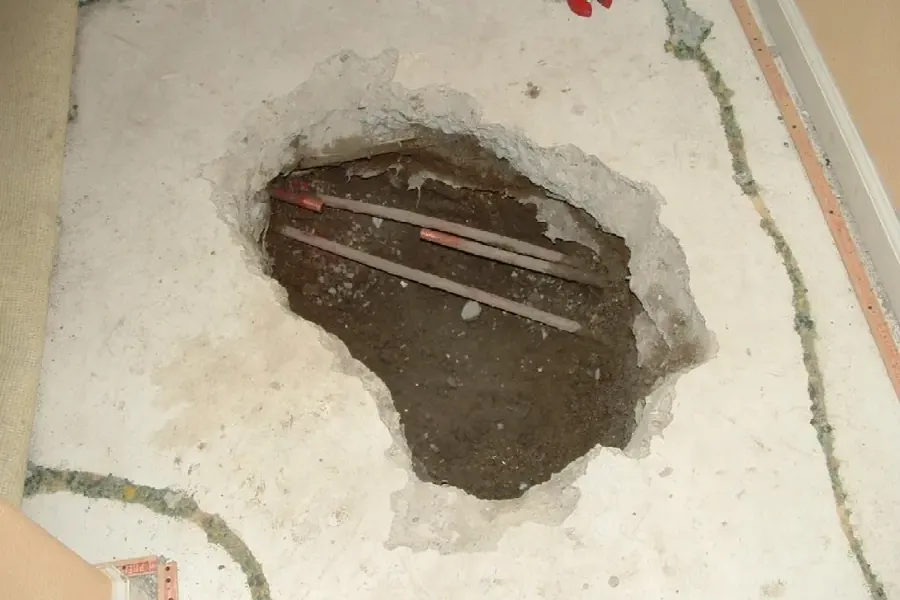
Moisture beneath a finished floor can spread beyond the point where it becomes visible. Slab leak water damage in Cornelius therefore needs two answers: where the water originates and which materials remain wet after the source stops.
Testing before opening the floor
A property beside Lake Norman does not automatically have groundwater intrusion. A wet floor on Catawba Avenue needs source testing before the crew treats it as a buried supply leak. The eastern drainage toward the Rocky River describes geography; pressure tests and inspection establish the source inside the individual building.
- A warm floor section can prompt plumbing investigation without locating the break precisely.
- Darkened joints or softened adhesive can reveal moisture below an intact surface.
- Wet wall plates may show that moisture has reached the room perimeter.
- Repeated readings help separate an active source from residual water in dense material.
Concrete and finishes have different drying limits
The slab, adhesive, wood backing and lower wall assembly release moisture at different rates. The technician assesses each layer rather than applying a single surface reading to the entire floor. Selective removal can expose trapped moisture, but the decision depends on damage, contamination and the construction actually present.
A plumber's repair opening also needs coordination. The restoration record should show which materials were wet before opening and which work belongs to source access. The crew avoids representing a pipe repair as completed structural drying.
Concealed utilities and structural details can make an unplanned floor opening hazardous. Occupants should not drill, cut concrete or remove a heavy finish to hunt for a leak. A qualified repair professional identifies the services and chooses access. The drying team then works within the safe opening, controls dust and debris as required, and protects surrounding dry surfaces while checking moisture beyond the immediate repair area.
Document the condition before flooring returns
The final moisture record supports the handoff to the flooring installer. Product-specific installation requirements still apply. EPA WaterSense leak information covers water conservation and leak awareness, while FEMA water preparedness addresses broader water safety. Neither replaces testing of the actual slab and floor assembly.
Coverage
Slab leak water damage in Cornelius
The restoration team serves ZIP 28031, including the Catawba Avenue corridor and homes near Lake Norman. Crews check the actual source and wet materials at each property. Coverage also includes Mint Hill, Pineville, Westport, Sherrills Ford and Stanley.
Related services
Related water damage services in Cornelius
01Does a warm floor always mean a slab leak?
No. Warmth is a clue, not a diagnosis. Plumbing testing, the moisture pattern and the building layout help establish whether a buried supply is leaking or another source explains the condition.
02Can the crew dry through tile?
An intact tile face may conceal wet backing, adhesive or adjoining materials. The technician evaluates the assembly and access options. Surface air movement alone may not reach moisture trapped under an impermeable layer.
03Is every local house built on a slab?
No foundation type should be assumed from the town name. The assessor confirms the construction at the property before recommending a buried-pipe investigation or a drying method for the affected floor.
04Does fixing the pipe remove the moisture?
Repair stops further discharge when the source is correctly identified. Existing water remains in connected materials until extraction, evaporation or removal addresses it. The drying scope follows those materials rather than the repaired pipe alone.
05When can new flooring be installed?
The flooring installer checks the product’s moisture requirements and substrate condition. The restoration log documents progress, while each adhesive or finish system requires its own installation checks.
06Can an unexplained wet floor receive urgent assessment?
24/7 dispatch supports water-loss assessment, including persistent floor moisture. The team asks about source clues and safe access, then separates plumbing investigation from the cleanup and drying needed at the property.
24/7 water damage response
A buried leak needs more than a patched opening
The restoration technician maps connected moisture and records the retained materials before the floor repair proceeds.