Cornelius, NC · Water damage response
Burst Pipe Water Damage in Cornelius, NC
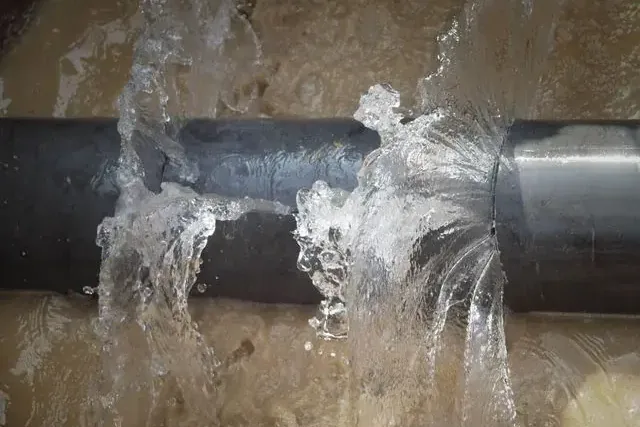
A split supply pipe can drive water behind finishes before the valve closes. The response team offers 24/7 assessment, extraction and cavity drying after source control, with a moisture map showing how far the discharge travelled.
(888) 578-4720Supply stopped? Assess the spread- 24/7 water-loss dispatch
- Wall-cavity moisture checks
- Source repair kept distinct
First steps
First steps for burst pipe water damage
- Close a safely reachable valveAn occupant can use a known shutoff from a dry position. A damaged valve or inaccessible supply needs a plumber rather than an improvised repair.
- Avoid the spray and electricityPeople should keep clear when water reaches lights, outlets or a panel. An electrician determines the electrical safety of the affected space before cleanup proceeds.
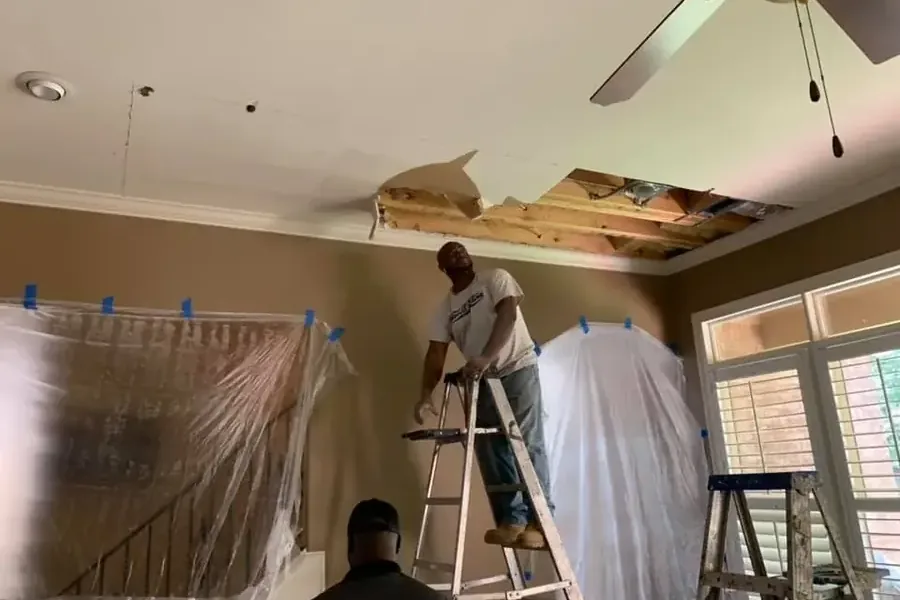
- Watch adjoining levelsWater from an upper room can enter a ceiling below. Occupants should report stains, dripping fixtures or sagging panels without standing beneath the damaged area.
- Keep the failed part documentedPhotographs of the source and initial spread can support the loss record. The repair professional and insurer can advise whether the removed pipe section should be retained.
Planning costs
What does burst pipe water damage cost in Cornelius, NC?
Burst pipe mitigation often needs a planning range of $1,200 to $6,500. A concealed release can add wall access, wet insulation removal and multiple drying zones. Pipe repair and finish reconstruction belong in separately identified scope items.
Accessible supply release
$1,200 to $2,500- Water confined near the failed fixture
- Extraction from reachable floor surfaces
- Initial wall-base readings
Concealed wall spread
$2,500 to $4,500- Wet cavity assessment and controlled access
- Insulation or damaged finish removal
- Daily drying equipment checks
Multiple levels affected
$4,500 to $6,500+- Ceilings and adjoining room assemblies
- Greater handling and protection needs
- Separate material goals by drying zone
Estimate only. The water damage cost calculator shows how wet area, contamination and material choices affect the planning range.
Measured work
The burst pipe water damage process
Stop and confirm
A plumbing professional addresses the failed supply. The restoration technician confirms whether new water continues to enter before setting the drying boundary.
Map the discharge
The crew follows water through the wall base, floor seams and any lower ceiling, documenting the material condition before opening finishes.
Extract and access
Extraction removes liquid while selective openings expose trapped moisture. The technician evaluates insulation and layered finishes for safe retention or removal.
Dry the assembly
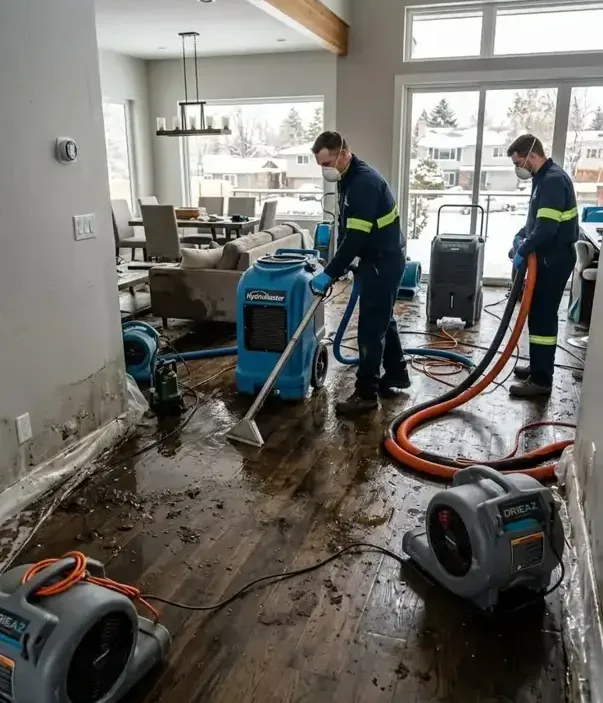
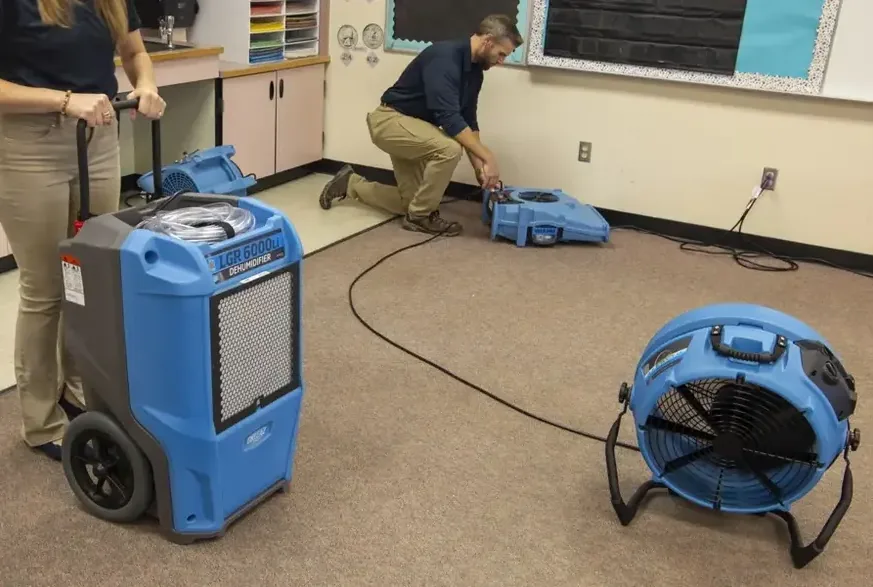
Air movement and dehumidification work together inside the controlled area. Daily readings show whether the cavity and adjacent materials continue toward their goals.
A burst pipe creates more than a wet spot beneath the break. Pressure can send water sideways through a stud bay, across a ceiling or under flooring. The first moisture map records that route so the cleanup scope does not stop at the visible spray.
Follow the pipe water beyond the repair
For a property near Catawba Avenue, the plumber's completed repair solves the supply defect, but the surrounding materials still need assessment. A home near Lake Norman requires the same distinction. The Rocky River drainage setting does not explain a pressurized indoor discharge; the observed source does.
- Wall insulation can hold water against framing after the paint feels dry.
- Ceiling channels may carry water away from the room containing the failed pipe.
- Flooring transitions can hide a wet seam between two different materials.
- Cabinet bases need checking when the supply runs behind an appliance or sink.
Opening a wall with a purpose
The technician selects access points from readings and the material condition. Sound material exposed to a fresh sanitary release may allow controlled drying; swollen panels or contaminated porous layers need a different decision. The crew photographs the assembly before removal and records why each opening was necessary.
A closed fixture valve may not isolate every pipe feeding a room. Occupants should avoid dismantling fittings or entering a wet electrical area to search for the break. A plumber confirms source control, and an electrician assesses affected circuits. The restoration crew begins only where access is safe, keeps the working route clear and checks overhead materials before moving equipment beneath a soaked ceiling.
From the incident to a repair-ready room
Drying logs document the change between the initial wet reading and the final material condition. Those records support the scope without promising insurance payment. EPA WaterSense offers water-use and leak information; FEMA preparedness information explains safety considerations when water affects a building. The actual pipe repair and the indoor dry-out remain separate work items.
Coverage
Burst pipe water damage in Cornelius
The restoration team serves ZIP 28031, including the Catawba Avenue corridor and homes near Lake Norman. Crews check the actual source and wet materials at each property. Coverage also includes Mint Hill, Pineville, Westport, Sherrills Ford and Stanley.
Related services
Related water damage services in Cornelius
01Does shutting the valve finish the emergency?
It stops one source when the correct valve works, but water already inside finishes continues to move. The response team checks the room and adjoining assemblies before deciding which materials need extraction or controlled opening.
02Can the wall stay closed?
The moisture readings, insulation and panel condition decide. The technician may dry a suitable assembly through controlled access, while saturated insulation or damaged wallboard can require removal to reach the retained structure.
03Who fixes the failed pipe?
A plumbing professional addresses the source repair. The restoration crew handles the resulting wet materials and drying records. Written scopes should identify those responsibilities so the owner understands what each service includes.
04Why inspect the room below?
Gravity can move discharge through floor penetrations and into a lower ceiling. A small upstairs puddle may accompany a larger concealed wet area, so the inspection follows the route beyond the source room.
05Can dispatch assess an after-hours burst?
24/7 dispatch supports urgent water-loss assessment. The team needs the source status, property location and any hazards. Those details help plan the response without a fixed arrival-time promise.
06What records help explain the damage?
Source photographs, the plumber’s repair notes, material readings and the mitigation scope provide different parts of the incident record. The insurer decides the claim under the policy rather than from one photograph alone.
24/7 water damage response
A repaired pipe can leave a wet structure
The drying team checks the connected rooms and cavities, then records progress until the retained materials reach their goals.