Cornelius, NC · Water damage response
Storm Flood Cleanup in Cornelius, NC
Outdoor water changes the cleanup decision as soon as it crosses the threshold. The mitigation crew contains affected areas, removes contaminated porous material and dries the retained structure after safe access, with emergency dispatch available 24/7.
(888) 578-4720Assess the outdoor water inside- 24/7 flood-loss dispatch
- Category 3 material controls
- Retained-structure drying logs
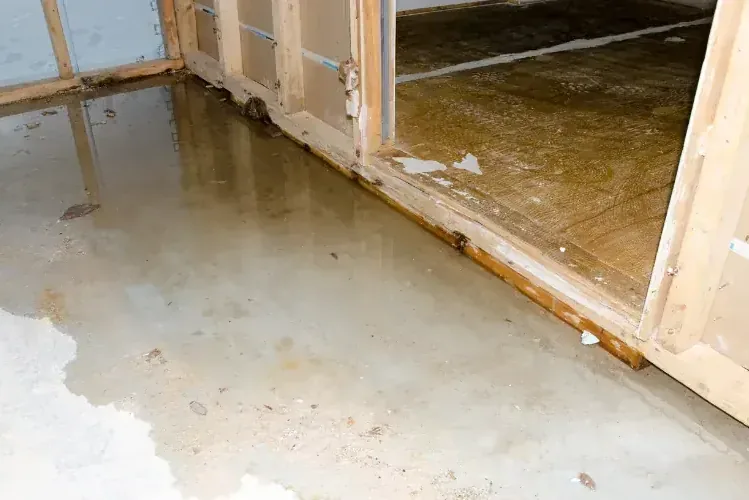
First steps
First steps for storm flood cleanup
- Wait for safe entryOccupants should avoid floodwater around damaged electrical systems or unstable structures. Emergency officials and appropriate professionals determine when the building can be entered for assessment.
- Keep clean areas separatedShoes and belongings can move contamination from a flooded room into dry spaces. The household should restrict access rather than begin carrying wet contents through the building.
- Photograph from a safe positionWater marks, debris and affected contents help establish the initial condition. People should not enter standing water merely to collect a closer photograph or retrieve paperwork.
- Record the apparent entry routeThe team needs to know whether water crossed a doorway, entered a low opening or followed another path. The observed route matters more than a general storm description.
Planning costs
What does storm flood cleanup cost in Cornelius, NC?
Storm flood mitigation commonly requires $2,500 to $12,000 or more. Contaminated material removal, sediment, affected area and structural access drive the scope. Major rebuilding and source improvements can add costs beyond extraction and drying.
Limited outdoor-water entry
$2,500 to $4,500- Controlled extraction in an accessible area
- Contamination assessment and material sorting
- Cleaning of suitable retained surfaces
Several contaminated rooms
$4,500 to $8,000- Porous finish removal and waste handling
- Cleaning beneath visible water marks
- Separate drying zones and daily records
Extensive flood involvement
$8,000 to $12,000+- Broader removal and contents decisions
- Greater access and contamination controls
- Longer monitoring of retained assemblies
Estimate only. The water damage cost calculator shows how wet area, contamination and material choices affect the planning range.
Measured work
The storm flood cleanup process
Assess the flooded building
The crew checks source, safety and contamination before choosing access. Water marks and debris establish the starting condition for the scope and photographs.
Extract and remove
Pumps clear accessible water. The team contains the work and removes porous materials that cannot remain after exposure, documenting the affected assembly.
Clean the retained structure
Physical cleaning removes sediment and contamination from accessible surfaces. Appropriate products follow their label directions rather than substitute for removal and cleaning.
Verify the dry-out
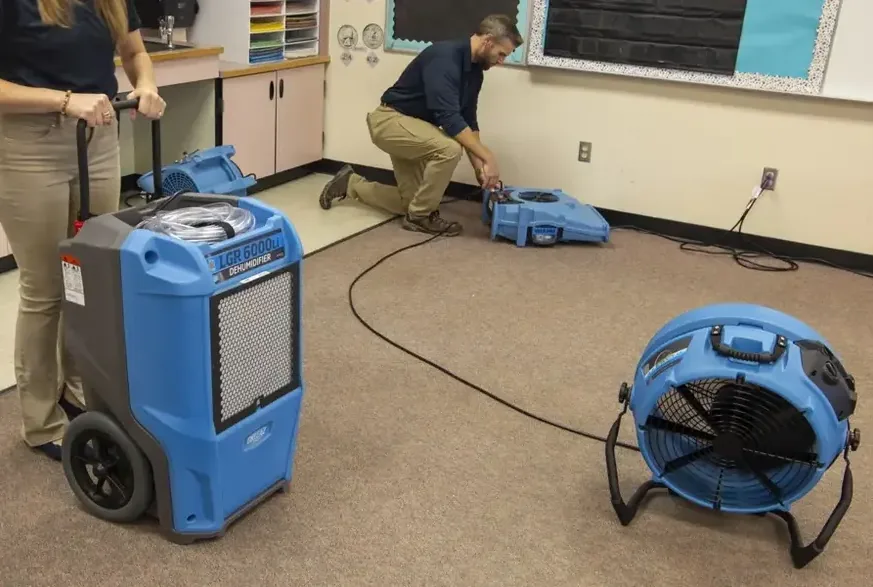
The technician measures retained framing and other assemblies while dehumidification and air movement operate. Final readings support the handoff to reconstruction.
Floodwater carries what it touches into a building. A shallow layer can still affect carpet backing, wallboard and stored contents. Storm flood cleanup therefore begins with contamination and access decisions, not with an assumption that a smaller puddle means a simple fan-only job.
Watershed geography is not a loss diagnosis
The western side of Cornelius drains toward Lake Norman, while the eastern side drains toward the Rocky River. Lake Norman formed through damming of the Catawba River. These facts describe the local landscape; the inspection must still document how outside water entered the individual building and which rooms it reached.
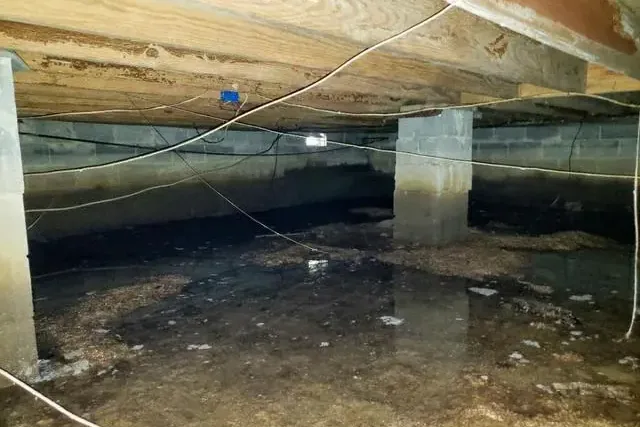
- Debris and silt can collect behind baseboards and inside floor-level openings.
- Porous wall and floor layers need evaluation beyond the visible water mark.
- Dry rooms require protection from contaminated traffic and material handling.
- Retained framing needs cleaning before the final drying stage can be assessed.
Removal and cleaning precede finish repair
The mitigation team identifies the materials that can remain and the layers that need disposal. A cleanable surface may hide a contaminated backing, so the decision follows the whole assembly. The work record includes pre-removal photographs, affected materials and the rationale for selective openings.
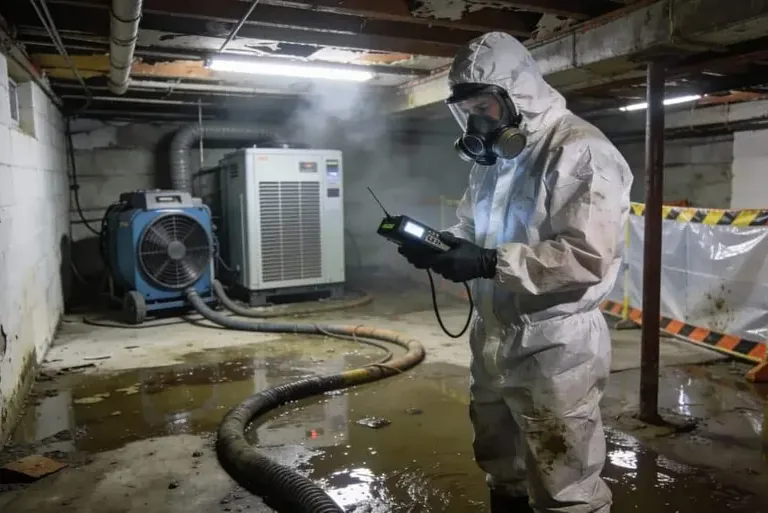
Floodwater may contain sewage, chemicals and sharp debris even when it looks clear. Occupants should keep children and animals away, avoid operating electrical equipment in the wet area and refrain from spreading the water with household fans. The crew establishes safe access and containment, selects protective equipment for the conditions and addresses damaged utilities before extraction and cleaning proceed inside the building.
Separate flood records from coverage assumptions
The source description and water-entry photographs help explain the event. FEMA flood insurance information addresses flood coverage, while Ready.gov flood safety covers general precautions. The insurer decides the policy response. The restoration scope should clearly separate mitigation from rebuilding or drainage changes proposed after the loss.
Coverage
Storm flood cleanup in Cornelius
The restoration team serves ZIP 28031, including the Catawba Avenue corridor and homes near Lake Norman. Crews check the actual source and wet materials at each property. Coverage also includes Mint Hill, Pineville, Westport, Sherrills Ford and Stanley.
Related services
Related water damage services in Cornelius
Questions
Storm Flood Cleanup questions in Cornelius
(888) 578-4720Review the flood entry and wet rooms01Does a low water level reduce contamination?
Even shallow outside water can carry contaminants. Outside water can contaminate porous finishes even when it only crosses a threshold. The assessor considers source, contact and affected materials rather than using water depth alone.
02Can household fans speed up cleanup?
Fans can spread contamination when used before assessment and cleaning. The crew first controls access, removes affected materials and addresses the remaining surfaces. Drying equipment then operates within the planned work area.
03Why remove material above a water mark?
Moisture and contaminants can wick into porous layers beyond the visible mark. The technician checks the actual material condition and documents the necessary removal boundary instead of relying on a stain alone.
04Does Lake Norman proximity mean a flood claim?
No. The crew documents the entry route and the conditions at the property. The insurer reviews that record, the event details and the policy terms when deciding coverage for the loss.
05Can assessment begin outside normal hours?
Emergency dispatch is available 24/7. Safe entry, weather and utility conditions influence the work plan. The team should not enter an unsafe structure simply because extraction equipment is available.
06What remains after contaminated finishes leave?
The retained structure needs cleaning, moisture assessment and controlled drying. Reconstruction follows the documented material condition. Framing, lower plates and concealed surfaces need moisture checks after removal.
24/7 water damage response
Begin with the floodwater source and safe access
The mitigation team records the contaminated area, handles affected materials and measures the retained structure through drying.