Cornelius, NC · Water damage response
Structural Drying in Cornelius, NC
Water removal starts the recovery, but retained materials need measured drying. The drying team maps moisture, controls evaporation and humidity, and records progress in framing, wallboard and floor assemblies until the material goals support the repair handoff.
(888) 578-4720Build a measured drying plan- IICRC S500 drying framework
- Daily material measurements
- 24/7 water-loss dispatch
First steps
First steps for structural drying
- Confirm that water entry stoppedA repaired pipe or roof opening needs source verification. Drying equipment cannot compensate for continued discharge into the same wall, floor or ceiling assembly.
- Leave equipment settings aloneOccupants should discuss noise, access or power concerns with the technician rather than switching equipment off. Interruptions affect the measurements and may change the drying plan.
- Maintain the planned room conditionsOpen windows and doors can add uncontrolled moisture or disrupt containment. The crew explains which spaces should remain closed and how occupants can use the safe access route.
- Report changing conditionsNew staining, odors, tripped circuits or renewed dripping should reach the team promptly. The technician can reassess the source, equipment and affected boundary instead of relying on an outdated map.
Planning costs
What does structural drying cost in Cornelius, NC?
Structural drying commonly requires $1,000 to $6,000, depending on wet area, material density, access and equipment duration. Extraction, contaminated removal and reconstruction may add separate scope items. The drying plan follows readings rather than a fixed day count.
Small accessible assembly
$1,000 to $2,000- Initial moisture map and reference checks
- Limited air movement and dehumidification
- Documented progress at selected materials
Several connected rooms
$2,000 to $4,000- Multiple materials and drying zones
- Equipment adjustments as conditions change
- Daily measurements across affected boundaries
Dense or concealed materials
$4,000 to $6,000+- Specialty access and material monitoring
- Longer equipment use where readings require
- Detailed handoff before finish replacement
Estimate only. The water damage cost calculator shows how wet area, contamination and material choices affect the planning range.
Measured work
The structural drying process
Set material goals
The technician selects appropriate reference conditions and records initial moisture. The plan distinguishes each affected assembly instead of assigning one number to the entire building.
Control the moisture load
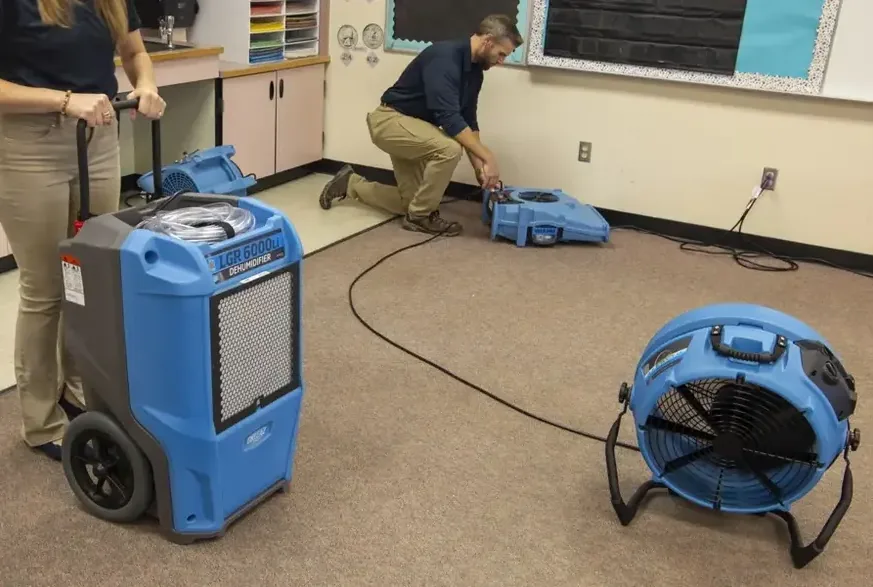
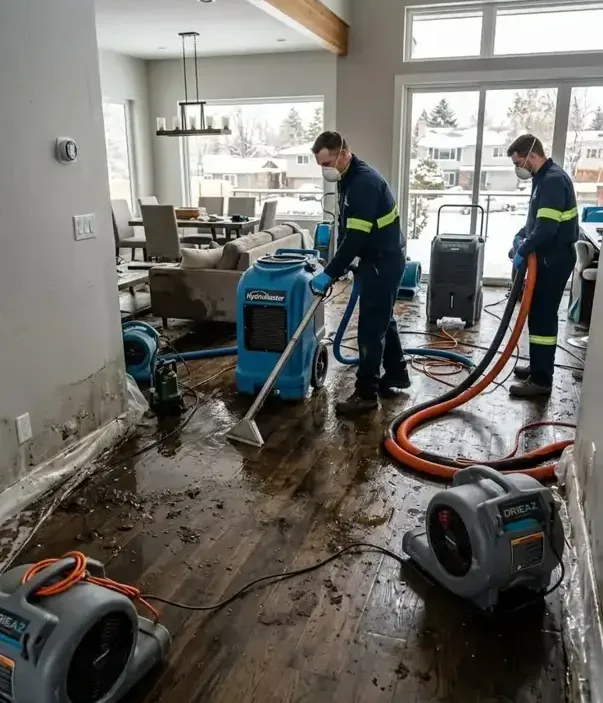
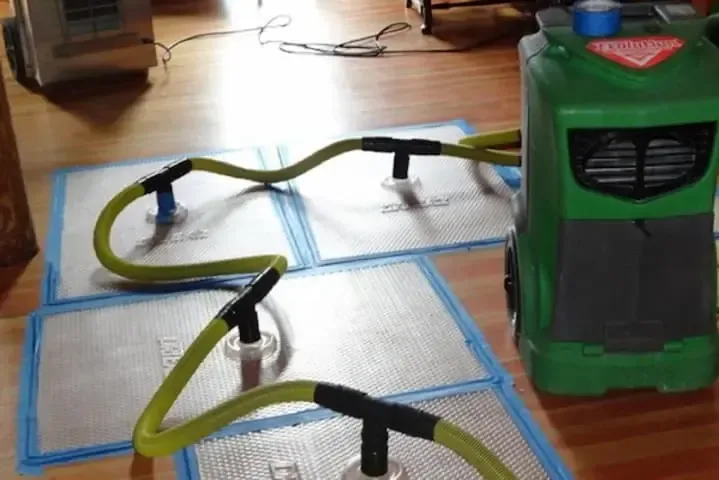
Air movers promote evaporation from suitable exposed surfaces, while dehumidifiers collect the released moisture. Equipment capacity follows the assessed drying area and conditions.
Read and adjust
Daily material and psychrometric measurements reveal progress. The crew changes equipment placement or access when a wet pocket stops responding as expected.
Verify and hand off
Final measurements document the retained materials before removal of equipment. The repair professional reviews that record alongside product-specific requirements for new finishes.
Structural drying replaces guesswork with repeated material checks. A room can feel comfortable while moisture remains in a wall plate, floor backing or enclosed cavity. The drying plan identifies those assemblies and records how each responds after the water source stops.
Local geography does not set the drying schedule
A property near Lake Norman does not automatically need the same equipment duration as one along Catawba Avenue. The Rocky River drainage area describes the eastern landscape, not the moisture load inside a wall. The technician measures the building, its affected materials and the air conditions within the drying zone.
- Moisture mapping defines the wet boundary and representative monitoring points.
- Thermal imaging locates suspect patterns that a meter then checks directly.
- Air readings show how temperature and humidity influence the working environment.
- Material readings determine whether retained layers progress toward an appropriate dry reference.
Air movement and dehumidification work together
A fan moves air but does not remove the released moisture from a closed room. An LGR dehumidifier reduces that moisture load so drying can continue. The technician balances equipment with electrical capacity, safe paths and the condition of the materials. Contaminated losses need removal and cleaning before this stage proceeds.
Unplugging a dehumidifier, moving an air mover or opening a contained room can change the drying environment and invalidate assumptions in the daily record. Occupants should report noise, temperature or access concerns to the technician so the setup can be adjusted safely. Wet electrical components, overheating equipment or a tripped circuit need prompt assessment; the household should never improvise an extension arrangement across a damp floor.
A completion record is more useful than a calendar promise
The final report compares initial and closing readings, identifies retained materials and notes any remaining repair requirements. EPA indoor air information gives context for indoor environmental conditions, while Ready.gov flood recovery information addresses safe recovery after water entry. Product-specific flooring or finish requirements still apply after restoration drying.
Coverage
Structural drying in Cornelius
The restoration team serves ZIP 28031, including the Catawba Avenue corridor and homes near Lake Norman. Crews check the actual source and wet materials at each property. Coverage also includes Mint Hill, Pineville, Westport, Sherrills Ford and Stanley.
Related services
Related water damage services in Cornelius
01How does the crew know when to stop?
The technician compares affected materials with appropriate drying goals and reference conditions. Final readings need to support the repair handoff. Material condition determines the equipment duration for each affected assembly.
02Does thermal imaging measure moisture directly?
A thermal image shows temperature differences that can guide investigation. A suitable moisture meter and inspection confirm the material condition. The technician should not treat a colored image alone as proof of wet or dry construction.
03Why are readings taken every day?
Repeated measurements reveal whether materials respond to the equipment and whether hidden pockets remain. The crew can adjust placement, access or conditions when progress slows instead of leaving the initial setup unchanged.
04Can windows stay open during drying?
The planned drying environment determines that decision. Outdoor air can add moisture or disrupt controlled conditions. Occupants should follow the technician’s instructions and discuss ventilation needs rather than change the setup independently.
05Is structural drying available after an overnight leak?
24/7 dispatch supports water-loss assessment. Source control, safe entry and extraction come first when necessary. The technician then sets the drying scope for the retained materials actually affected by the release.
06Does a dry room establish flooring readiness?
A restoration record documents the drying condition, but a flooring product can have its own substrate requirements. The installer reviews those criteria and the material condition before approving the new finish.
24/7 water damage response
A dry-out should finish with a record
The technician tracks moisture through the affected assemblies and documents the conditions at the repair handoff.