Cornelius, NC · Water damage response
Roof Leak Water Damage in Cornelius, NC
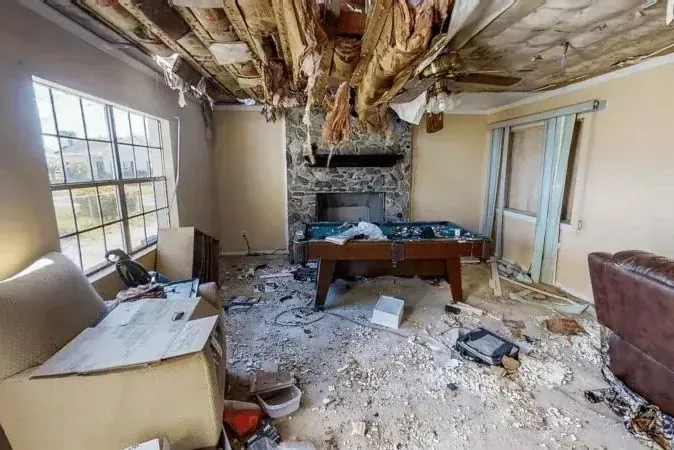
Rain entering the roof can travel through insulation and framing before reaching a room. The drying team assesses that interior path, protects affected materials and documents the dry-out after a roofing professional addresses the opening.
(888) 578-4720Follow rainwater into the structure- 24/7 interior leak response
- Attic-to-room moisture tracing
- Roof repair coordinated separately
First steps
First steps for roof leak water damage
- Stay off the wet roofOccupants should not climb a roof or enter an unsafe attic during a storm. A roofing professional chooses a safe method of assessing and controlling the entry point.
- Keep away from ceiling damageHousehold members should avoid the area under soft panels or dripping electrical fixtures. The response team needs those hazards described before anyone moves equipment into the room.
- Record when dripping changesNotes about rain timing and the first visible stain can help the inspection. Wet insulation may remain and the opening may admit rain again after dripping pauses.
- Protect only safely accessible contentsDry belongings can move out of an unaffected access route. Furniture below an unstable ceiling should stay until the crew assesses the room and controls the overhead risk.
Planning costs
What does roof leak water damage cost in Cornelius, NC?
Interior cleanup after a roof leak often ranges from $1,000 to $6,000. Wet insulation, cavity access, ceiling removal and the number of affected rooms drive the mitigation scope. Roof repairs and finish rebuilding require their own pricing.
Localized interior staining
$1,000 to $2,000- Moisture checks around the entry route
- Limited contents protection and access
- Drying of suitable retained surfaces
Attic and ceiling involvement
$2,000 to $4,000- Wet insulation assessment and handling
- Controlled ceiling or wall openings
- Daily checks through the exposed assembly
Wider rainwater spread
$4,000 to $6,000+- Several rooms or connected cavities
- More removal and drying equipment
- Coordination with source and finish repairs
Estimate only. The water damage cost calculator shows how wet area, contamination and material choices affect the planning range.
Measured work
The roof leak water damage process
Establish the entry route
The roofing assessment identifies the exterior defect while the restoration technician follows interior moisture from the attic toward walls, ceilings and flooring.
Protect and document
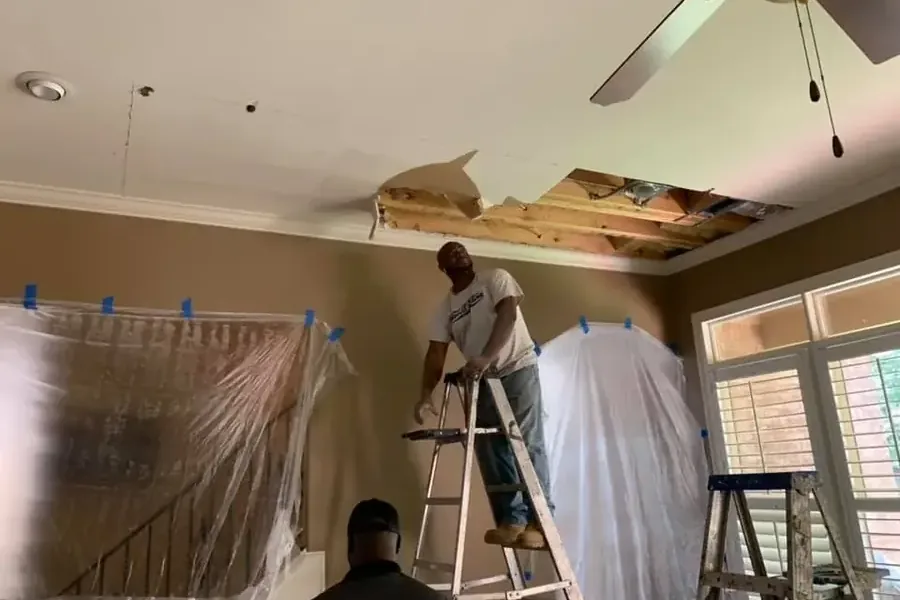
The crew records wet insulation, damaged panels and contents before selective removal. Safe access and protection keep the work from spreading debris into dry rooms.
Dry retained framing
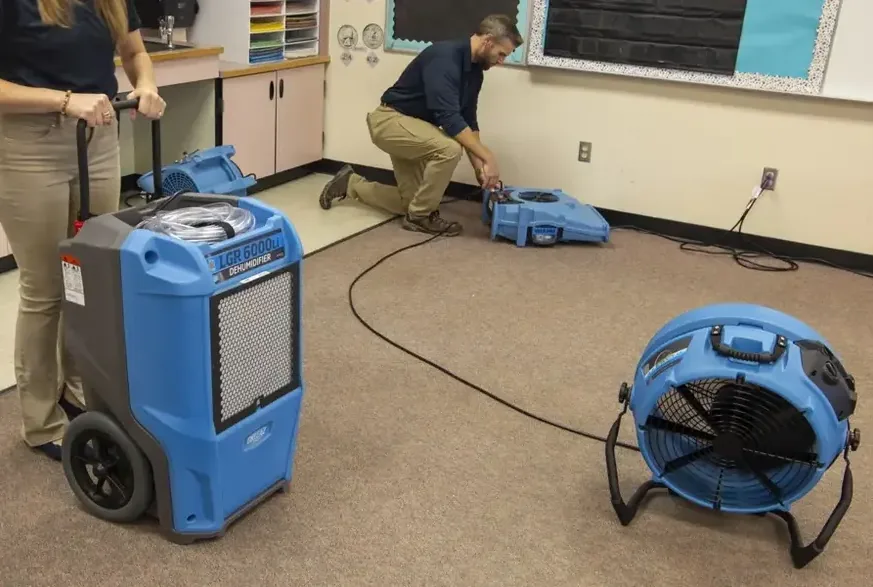
Air movement and dehumidification address the accessible structure after source control. Material readings show which cavities need more access or an equipment adjustment.
Verify before closing
The final record separates the roofing repair from the interior drying result. Reconstruction follows when the retained assemblies meet the relevant material goals.
Roof entry and a ceiling leak describe different parts of a water path. A roof defect admits rain at the building envelope; the first indoor stain may appear much farther along a rafter or junction. The assessment needs to connect those observations without guessing from the stain shape.
Rain entry in the local setting
Lake Norman is a useful landmark for the western side of town, while Catawba Avenue identifies a central corridor. On the eastern side, drainage runs toward the Rocky River. At the affected property, the roofing professional checks rain-entry points while the drying crew traces moisture through the materials below.
- Wet insulation can conceal a larger affected area than the visible ceiling mark.
- Roof penetrations and junctions need source assessment by the repair professional.
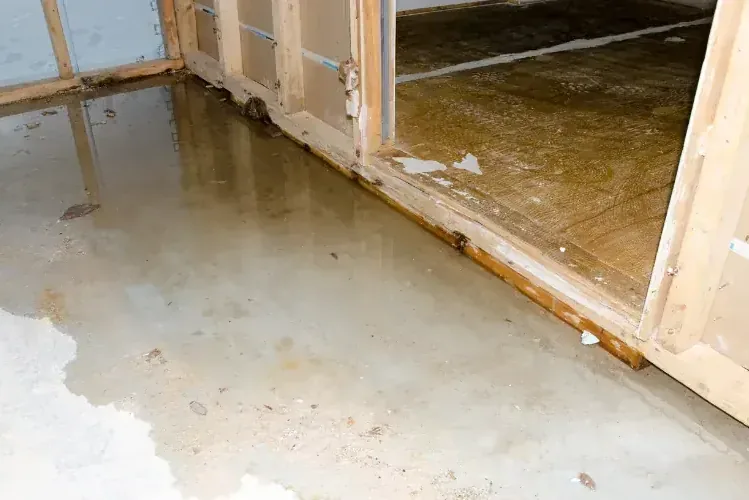
- Water along a wall top plate may continue into a separate room.
- A repeated drip after another rain suggests that source control needs rechecking.
Dry the attic path as well as the room
Removing a stained ceiling patch can leave wet insulation and framing above the opening. The technician checks those materials and records why a layer can remain or needs removal. Drying equipment works within safe electrical limits and the access available to the attic or cavity.
A wet roof, hidden ceiling joists and damaged wiring create hazards beyond the visible leak. People should avoid climbing, stepping between framing members or moving an attic cable to reach water. The appropriate repair professional assesses the exterior, and the restoration crew evaluates interior access. Work begins only in safe areas, with the rooms below protected from water release and debris during controlled opening.
Keep a clear source and drying record
Rain timing, photographs before removal and moisture logs help explain why several assemblies needed attention. A policy may distinguish different causes or maintenance conditions, so the insurer decides coverage. Ready.gov storm preparation addresses general weather precautions, while EPA water information supports broader water awareness. The property record should include the roofer’s findings, photographs of the opening and moisture readings from the rooms below.
Coverage
Roof leak water damage in Cornelius
The restoration team serves ZIP 28031, including the Catawba Avenue corridor and homes near Lake Norman. Crews check the actual source and wet materials at each property. Coverage also includes Mint Hill, Pineville, Westport, Sherrills Ford and Stanley.
Related services
Related water damage services in Cornelius
01Does a stopped drip mean the attic is dry?
No. Rain may have ended while insulation and wood still retain moisture. The drying technician checks the affected assembly and tracks the readings after source control rather than relying on the absence of dripping.
02Who repairs the roof opening?
A roofing professional handles the exterior source. The restoration crew addresses the resulting interior moisture, removal and drying. Coordinated records help distinguish the two scopes and the point at which each is complete.
03Can insulation stay after a roof leak?
The material condition, water exposure and ability to dry determine retention. Compressed or heavily saturated insulation may obstruct cavity drying. The technician documents the decision before replacing finishes around retained framing.
04Why check a wall far from the stain?
Water can travel along framing and enter a wall at another junction. The moisture map follows that path, so a visible ceiling patch does not set the final boundary of the affected area.
05Is interior help available during a rain event?
24/7 dispatch supports water-loss assessment. Active weather and safe access influence the work plan. The crew should not promise exterior access or a fixed response time during unsafe conditions.
06What should a claim file distinguish?
The source assessment, exterior repair and interior mitigation each explain different work. Photographs and daily readings support the interior scope. The insurer evaluates cause, policy terms and coverage independently.
24/7 water damage response
Trace the roof leak through the interior
The drying team checks the insulation, framing and room surfaces before the interior repair closes the wet path.