Pineville tank leakage recovery
Water Heater Leak Cleanup in Pineville
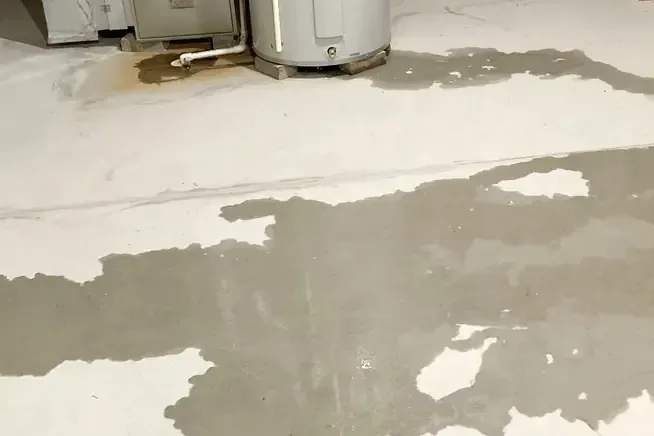
A tank leak can escape beneath stored belongings before a puddle reaches the doorway. The cleanup needs to follow water around the heater base, across floor transitions and into wall edges while equipment repair is arranged.
(888) 578-4720Discuss water spreading around the heater- Tank area assessment
- Adjoining room checks
- Repair and drying coordination
First steps
First steps for water heater leak cleanup
- Identify the wet equipment zoneThe report should include the tank location, whether water continues escaping and what surrounds the base. Safe access and potential heat or electrical exposure shape the first restoration and repair arrangements.
- Coordinate isolation and tank workA qualified contractor handles the heater's supply and operating connections. Restoration personnel plan extraction and material access around that work, especially when moving the appliance exposes wet floor or wall surfaces.
- Assess storage and room transitionsSaturated boxes, lower trim and floor coverings are checked for water contact. Inspection continues beyond the equipment enclosure where moisture can pass beneath a doorway or into the base of a partition.
- Dry before returning stored itemsRetained materials receive suitable drying and repeated readings. The completed scope identifies any removed finishes and confirms which storage areas can be used again without covering an assembly still undergoing recovery.
Planning costs
What does water heater leak cleanup cost in Pineville, NC?
Water heater leak cleanup in Pineville is shaped by access around the tank and how far water traveled into surrounding materials. Appliance replacement is separate from drying wet walls, floor backing and connected rooms affected by the discharge.
Water near the tank
$900 to $1,800- Accessible water beside the tank base
- Removal with nearby material condition checks
- Focused drying around the isolated heater
Leak reached an adjoining room
$1,800 to $3,200- Water crossing into adjoining finished space
- Wet trim and floor covering assessment
- Equipment across connected affected room areas
Concealed or prolonged spread
$3,200 to $4,500+- Moisture behind storage and enclosure finishes
- Access for backing and absorbent materials
- Broader drying observations and repair documentation
Estimate only. The water damage cost calculator shows how wet area, contamination and material choices affect the planning range.
Measured work
The water heater leak cleanup process
Equipment area survey
Active leakage, appliance hazards and surrounding space establish the first assessment. Repair arrangements and floor condition determine a safe sequence around the tank and its connected services.
Water path tracing
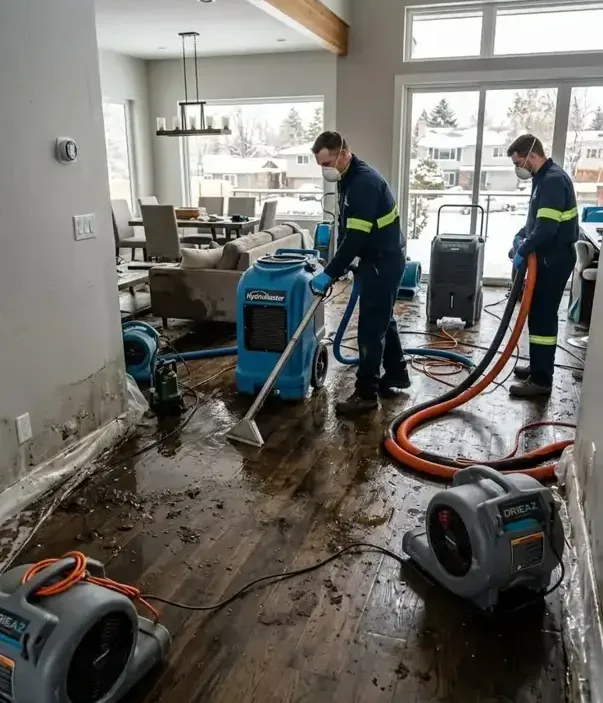
Discharge is followed beneath belongings and across transitions. Water removal and measurements identify concealed moisture extending beyond the original equipment footprint into adjoining finishes or storage areas.
Material recovery
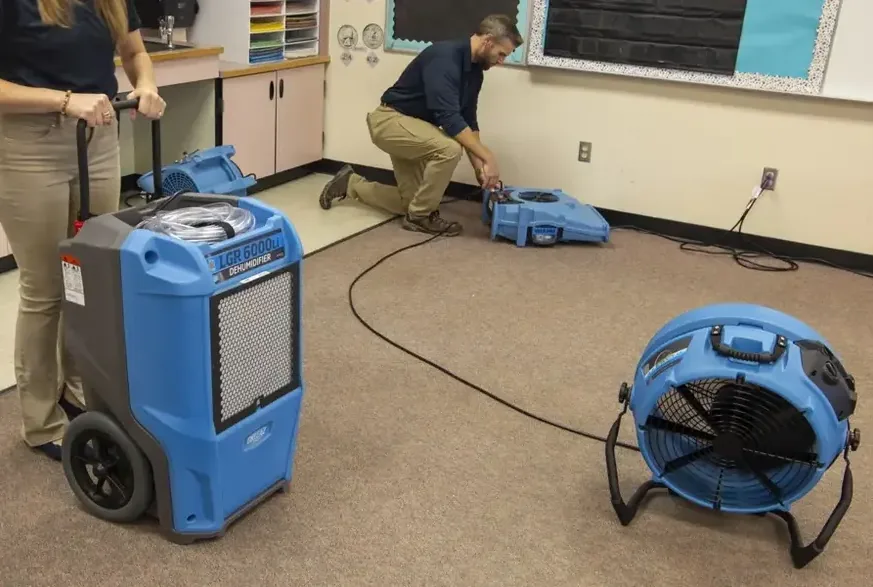
Retained surfaces receive drying after damaged absorbent items are removed. Replacement appliance access is considered so wet components remain reachable until the surrounding building assembly has recovered.
Storage and repair handoff
Records separate appliance replacement from room restoration. Finish repairs and storage conditions are identified before belongings return against walls or cover previously wet areas around the installed equipment.
Stored boxes can hide the first water escaping from a heater. By the time a wet edge appears in the next room, the equipment area may already contain saturated packaging, damp trim and moisture beneath a floor covering. Cleanup starts by establishing safe access around the appliance.
Separate the tank problem from the room damage
Park Road, Lancaster Highway and Sam Meeks Road are state maintained roads identified by Pineville. At an affected property, the heater's actual location determines the inspection route. An open equipment area offers different access from a narrow enclosure with wall finishes and stored belongings close to the tank.
- Describe whether leakage is active and whether the heater area remains safely accessible.
- Check storage touching the floor before water is carried into another room.
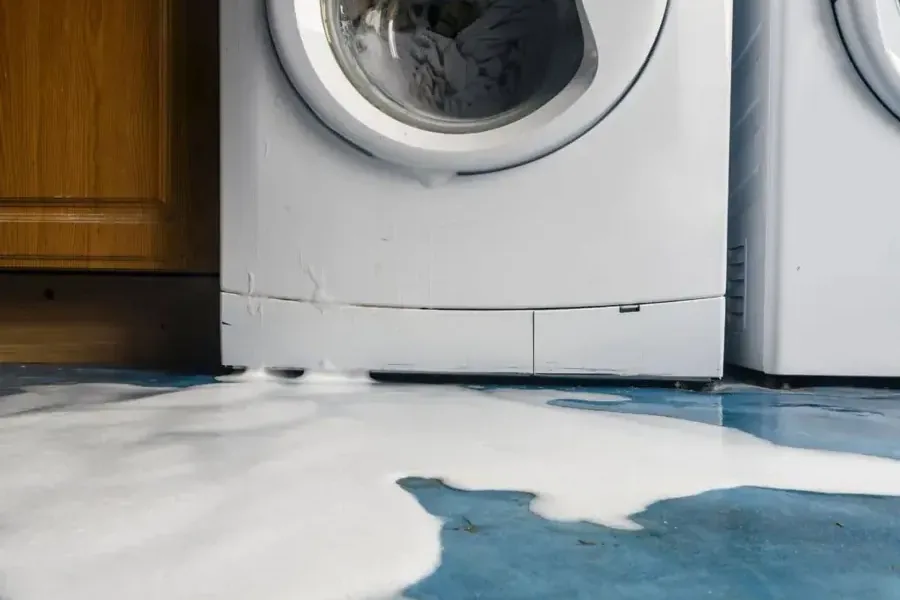
- Follow dampness beneath the doorway and along the adjoining lower wall edge.
- Coordinate replacement access so wet backing remains reachable after the appliance is moved.
Investigate what the tank footprint concealed
A replacement heater can occupy the same space while water remains in nearby materials. Inspection should examine the floor below and around the former footprint where access allows. Trim, wallboard backing and absorbent storage materials need separate retention decisions, particularly when the leak continued unnoticed behind the equipment.
Water around a heater may be hot, and the surrounding equipment can present electrical or fuel related hazards. Occupants should avoid touching controls while standing on wet flooring. A qualified contractor should manage safe isolation and appliance repairs. Cleanup personnel need a safe work area before extracting water or moving items close to the heater and its connected services.
Finish the recovery beyond the equipment room
Adjoining flooring needs moisture checks even after a replacement heater is operating correctly. Measurements at the threshold and lower walls show whether additional drying is needed. If water reached layered floor finishes, the scope may include water extraction, selective access and drying of retained components before storage and ordinary room use resume.
Coverage
Water heater leak cleanup in Pineville
Pineville heater leak assessments include equipment spaces and adjoining finished rooms reached by tank discharge. Details about the heater location, current leakage and surrounding storage help coordinate safe appliance work with the inspection of wet building materials.
The same service nearby: water heater leak cleanup in Cornelius, Mint Hill, Stanley.
Related services
Related water damage services in Pineville
Questions
Water Heater Leak Cleanup questions in Pineville
(888) 578-4720Describe the heater area spill01Does a new heater finish the cleanup automatically?
Replacement addresses the appliance, while the surrounding floor and walls may retain moisture. Those materials need inspection and appropriate drying before stored belongings or repaired finishes cover the affected area again.
02Can leakage travel beneath a closed doorway?
Water can pass through floor gaps and transitions without an obvious stream across the top. Moisture checks in the next room help establish whether the discharge reached backing or lower wall finishes.
03Should wet cardboard boxes stay beside the tank?
Saturated packaging can hold water against surrounding surfaces and may no longer support its contents safely. Handling and disposal decisions should account for the items involved and the condition of the wet equipment area.
04Is it safe to operate heater controls on a wet floor?
Wet access around powered or fuel connected equipment calls for qualified assistance. Occupants should avoid approaching controls through standing water and have the appliance safely isolated before cleanup work proceeds nearby.
05Why inspect behind the heater after it is moved?
The tank and stored items can conceal damp surfaces that were previously inaccessible. That opening provides an opportunity to assess the floor, wall backing and trim before replacement equipment restricts access again.
06What if only the concrete around the base looks wet?
The assessment still needs to consider nearby absorbent materials and any path toward a finished room. A limited exposed surface may need less work, but its visible outline should not determine the entire scope.
24/7 water damage response
Plan cleanup around the equipment work
Explain where the tank sits and what the water reached so the assessment can include storage, floor transitions and nearby wall materials.