Pineville supply pipe damage
Burst Pipe Water Damage in Pineville
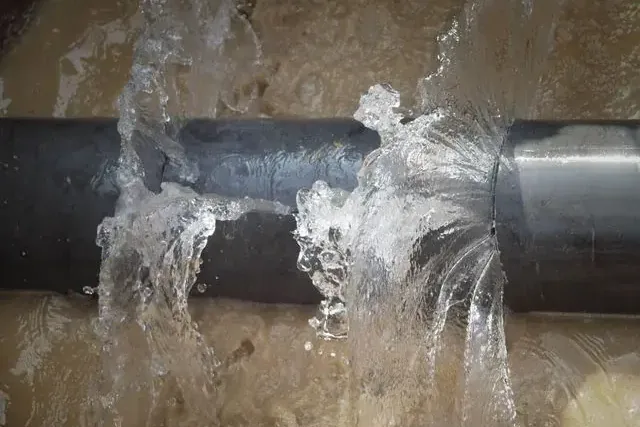
A broken supply pipe can send water through a wall before the floor starts pooling. Cleanup follows the release from the damaged connection into insulation, wall backing and the spaces below the original opening.
(888) 578-4720Discuss damage from the pipe release- Release path inspection
- Wet cavity access
- Floor and wall drying
First steps
First steps for burst pipe water damage
- Identify the failed supply sectionThe initial description should explain whether water still flows and where the nearest safe shutoff sits. Plumbing repair and interior cleanup can then be coordinated around the same release.
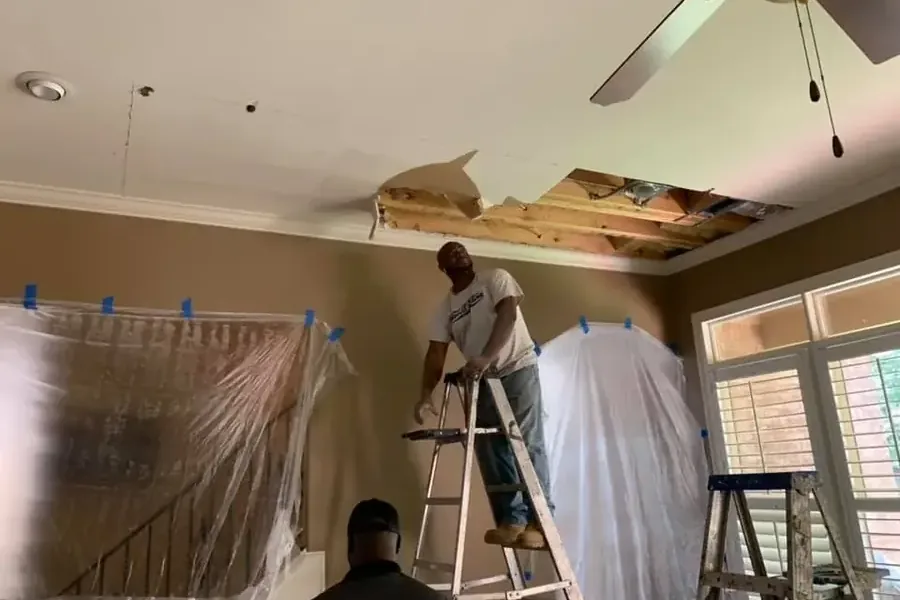
- Compare upper and lower areasWater can leave the visible pipe location through framing cavities and floor penetrations. The assessment checks connected rooms and the ceiling below when the building arrangement warrants it.
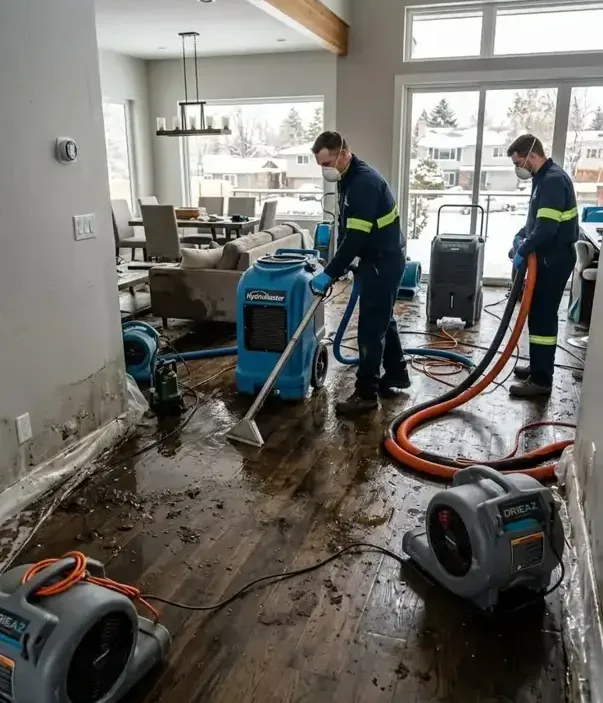
- Remove water and expose damageAccessible water is extracted before concealed materials are evaluated in detail. Selective openings follow the moisture map and material condition rather than an arbitrary cut across every wall.
- Record drying before finish repairRepeated readings show how the exposed assembly responds to equipment. The final record should distinguish the completed pipe repair from the remaining finish work and retained material condition.
Planning costs
What does burst pipe water damage cost in Pineville, NC?
Burst pipe cleanup in Pineville costs more when the release reaches enclosed walls, insulation or multiple levels. The length of the wet route and the condition of each affected layer matter alongside the visible water volume.
Accessible supply release
$1,200 to $2,500- Water concentrated around the accessible break
- Extraction across the immediately affected floor
- Targeted drying beside the repair opening
Concealed wall spread
$2,500 to $4,500- Wet backing inside an enclosed partition
- Selective access for insulation and framing
- Measurements across connected floor and walls
Multiple levels affected
$4,500 to $6,500+- Water migration through upper floor assemblies
- Ceiling damage beneath the original release
- Coordinated equipment across several affected spaces
Estimate only. The water damage cost calculator shows how wet area, contamination and material choices affect the planning range.
Measured work
The burst pipe water damage process
Release history
Discovery details and shutoff information establish the starting picture. The inspection then tests the visible damage against possible paths through connected building assemblies.
Controlled access
Damaged finishes are assessed for safe opening so wet insulation and framing can be reached. Source repair needs are considered before access is closed.
Assembly drying
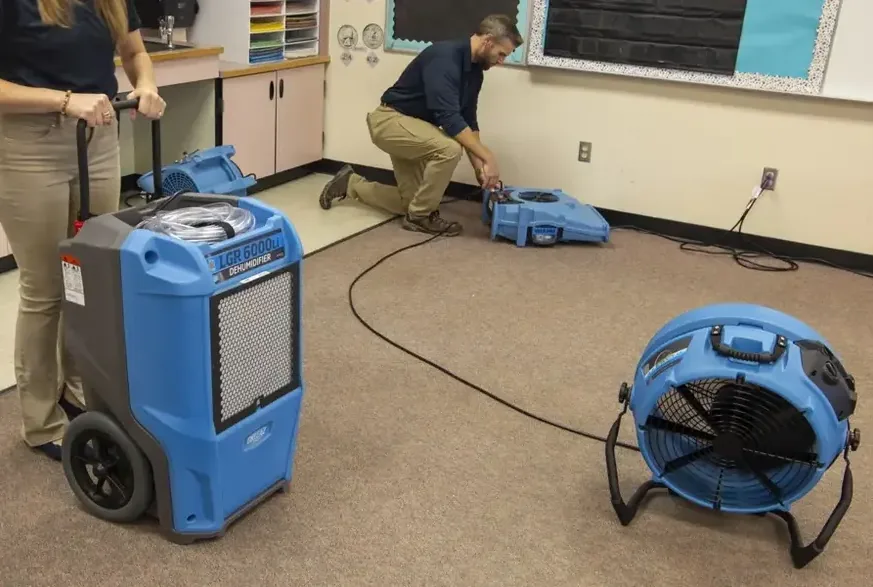
Air circulation and dehumidification target retained materials after extraction. Moisture checks track the deeper assembly rather than relying on the exposed face of wallboard.
Repair preparation
The closing scope records what dried, what was removed and which finishes remain to be replaced. That record supports an orderly handoff to repair trades.
The loudest part of a pipe failure may last only until the valve closes. The quieter problem remains inside the room: saturated wallboard, water beneath flooring and wet framing that cannot be assessed from the puddle alone. Each affected layer needs a defined recovery decision.
A local break with a clear chronology
On January 25, 2026, a pipe broke near Highway 51 and Downs Road during a winter storm. Escaping water formed roadway ice. The next day's report assigned repairs to the developer and said McCullough residents were unaffected. Indoor losses require attention to the specific pipe and building involved.
- A shutoff record helps establish when the building stopped receiving additional water.
- Open plumbing access can also reveal wet insulation around the damaged connection.
- Water moving downward may reach a ceiling below the original pipe failure.
- Floor readings should extend beyond the largest puddle near the visible opening.
Let the wet path define the opening
Restoration in Pineville can require access beyond the plumber's repair cut. Water may travel along framing or collect at the bottom of a partition. Measurements help decide where further exposure is useful, while the strength and condition of the finish determine which materials can remain during drying.
A spraying pipe beside electrical equipment creates a dangerous approach. An accessible valve on a dry route may allow the supply to be isolated, but a person should not enter standing water to reach it. Sagging wall or ceiling sections also need space around them. Qualified repair personnel should handle the failed pipe while cleanup personnel assess safe access to the wet building.
Keep the repair cavity open for drying
Replacing the damaged pipe does not remove water held in adjacent materials. Before wallboard closes the opening, the exposed structure should reach an appropriate dry condition. Where the loss extends into floor assemblies, water extraction and targeted drying can proceed alongside the cavity work within a coordinated scope.
Coverage
Burst pipe water damage in Pineville
Pineville pipe damage assessments include the room containing the break and any connected space receiving escaped water. Entry details, valve status and the location of the repaired pipe help identify the likely inspection route through the property.
The same service nearby: burst pipe water damage in Cornelius, Mint Hill, Stanley.
Related services
Related water damage services in Pineville
01Does the pipe repair include drying the wall?
The plumbing repair and the wet building are separate parts of the loss. Even after the pipe holds pressure again, insulation, framing and floor backing may need access and drying.
02Why inspect a room below the break?
Water can move through penetrations and floor cavities before appearing on a lower ceiling. Checking that route helps locate damage that would be missed by examining only the original puddle.
03Can intact paint conceal wet wallboard?
Paint can remain visually unchanged while the backing absorbs moisture. Appropriate readings and selective inspection help determine whether the assembly can dry in place or needs additional access.
04Should the damaged pipe section be discarded?
The owner can ask the repairing contractor about retaining the failed section when safe and practical. Photographs and repair notes also help preserve the cause and condition for the project record.
05Will opening every wall speed the cleanup?
Access should follow measured spread and material condition. Unnecessary demolition adds repair work, while openings that are too limited may leave wet layers unreachable. The scope needs to fit the actual damage.
06What information belongs in the completion record?
Useful details include the source repair, removed finishes, drying measurements and remaining reconstruction needs. Together they explain how the release was addressed and what still requires attention before normal room use.
24/7 water damage response
Map the damage beyond the opening
Provide the shutoff status and the rooms affected so extraction and cavity drying can be planned around the repair.