Water collecting above occupied rooms
Ceiling Leak Water Damage in Stanley
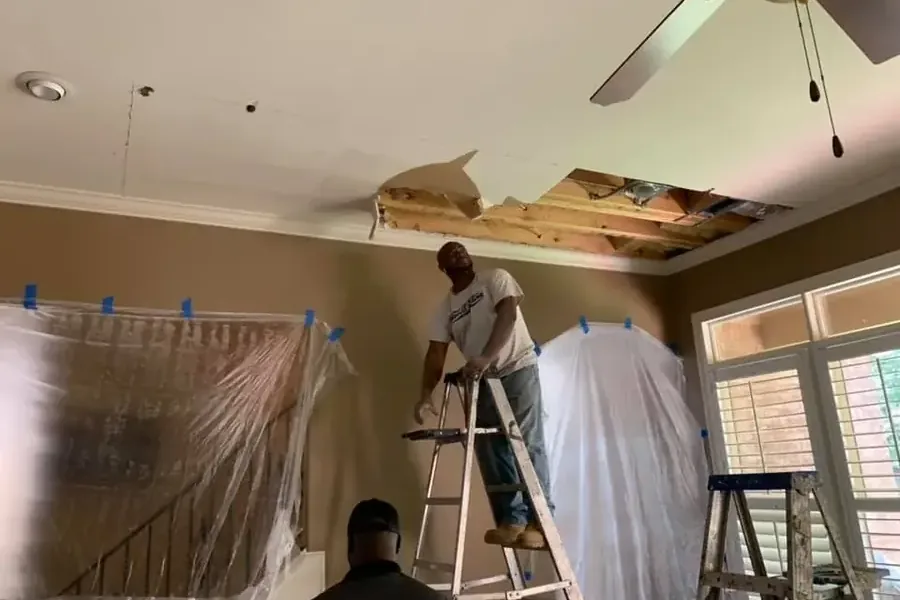
A swollen ceiling panel changes how a room can be used safely. Keep the area beneath it clear while the source above, the weight of wet materials and the spread into surrounding assemblies are assessed.
(888) 578-4720Discuss Stanley overhead water damage- Overhead safety assessment
- Wet insulation checks
- Ceiling cavity drying
First steps
First steps for ceiling leak water damage
- Restrict the space beneath damageKeep occupants and pets away from the wet ceiling footprint. A visibly sagging panel or falling debris requires a safe assessment before anyone works or retrieves belongings below it.
- Report nearby electrical involvementDescribe water around light fittings, fans or other overhead electrical components. Wet controls should not be touched, and electrical safety needs appropriate professional attention before cleanup equipment is positioned.
- Trace observations above and belowRecord dripping, staining and any visible overhead leak from accessible dry areas. Include floor damage beneath the ceiling so the inspection accounts for water that has already fallen.
- Preserve the opening for assessmentAfter source repair and selective removal, allow the cavity to be evaluated before replacement panels cover it. Retained framing and adjacent insulation may still require moisture removal and measurement.
Planning costs
What does ceiling leak water damage cost in Stanley, NC?
Ceiling leak restoration in Stanley depends on overhead access, panel condition and the spread beyond the stain. Wet insulation, adjoining rooms and water that reached the floor below can increase the removal and drying scope.
Small accessible ceiling area
$900 to $1,800- Defined staining near an accessible source
- Limited panel removal for cavity evaluation
- Focused drying of exposed overhead materials
Wet insulation and panels
$1,800 to $3,500- Saturated layers above the ceiling finish
- Controlled handling of damaged overhead sections
- Additional access to reach retained framing
Spread across connected rooms
$3,500 to $5,000+- Moisture travels along connected ceiling cavities
- Separate checks of rooms beneath drips
- Broader equipment and removal work areas
Estimate only. The water damage cost calculator shows how wet area, contamination and material choices affect the planning range.
Measured work
The ceiling leak water damage process
Evaluate overhead stability
The damaged area is reviewed for panel movement, retained water and electrical involvement. A working boundary keeps occupants away from surfaces that may release debris during access.
Find the release route
Inspection follows the source and staining across accessible overhead materials. The route helps distinguish the initial leak from water that collected farther along the ceiling assembly.
Expose the affected faces
Damaged panels and unsuitable insulation receive removal decisions. Safe openings give equipment access to retained framing and neighboring materials that cannot dry effectively behind closed ceiling finishes.
Check before panel replacement
Moisture readings track the accessible cavity and the room below. The handoff identifies drying progress and any remaining source or finish repairs before overhead surfaces are closed again.
The darkest stain may sit below a place where water collected, rather than beneath the original leak. A ceiling loss in Stanley needs a safe inspection above the visible mark before the repair area is defined. Plumbing, fixtures and other accessible overhead conditions help direct that investigation.
Make room below the damaged section
A bulging panel can hold water and lose strength. People and movable contents should remain outside the affected footprint until overhead conditions have been evaluated. Puncturing the ceiling without assessment can release water and debris unexpectedly, especially where the space also contains wiring or wet insulation.
- Report a change in panel shape along with the location of visible discoloration.
- Note nearby light fixtures without touching wet switches or electrical fittings for inspection.
- Check adjoining ceiling surfaces when water has followed framing away from its source.
- Plan protection below any opening before damaged panels or wet insulation are removed.
Inspect the cavity rather than painting the mark
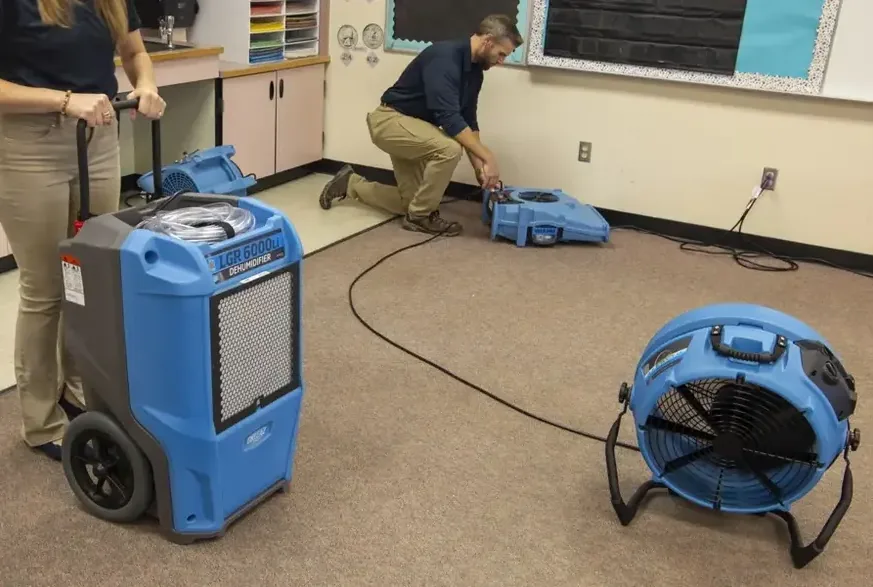
Fresh paint covers a symptom while moisture may remain above it. Access allows inspection of the framing, insulation and the reverse side of nearby panels. Materials that remain need a drying method that reaches their wet faces instead of merely moving air across the room below.
Main Street contains downtown businesses, Brevard Station Museum is downtown, and Harper Park serves as a community gathering place. Those local references help describe a property during a service discussion. For ceiling damage, also describe whether water is dripping, the panel is sagging or an overhead repair has already occurred. Each observation helps establish access and inspection priorities at the building.
Connect overhead work with the floor below
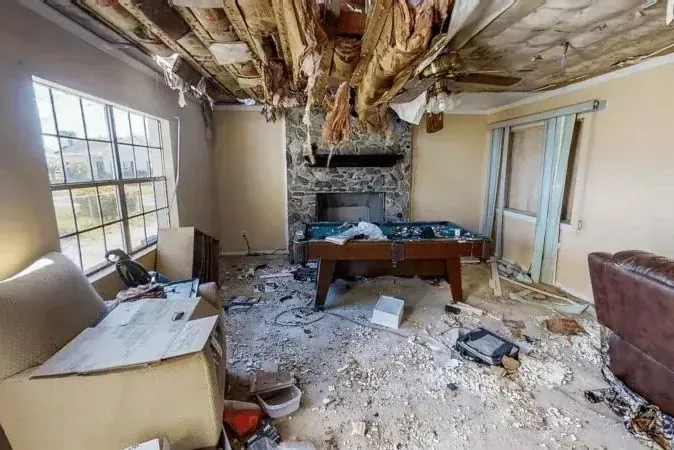
Drips can damage carpet, wood and contents under the ceiling. The assessment includes that secondary footprint so a repaired overhead assembly does not leave a wet floor behind. Water extraction may be needed before the ceiling cavity and lower room can receive coordinated drying.
Coverage
Ceiling leak water damage in Stanley
Ceiling damage assessment serves Stanley properties with an overhead release, including downtown settings near Main Street. The request should describe sagging, active dripping and any rooms above the damage, along with a safe route into the building.
The same service nearby: ceiling leak water damage in Cornelius, Westport, Sherrills Ford.
Related services
Related water damage services in Stanley
Questions
Ceiling Leak Water Damage questions in Stanley
(888) 578-4720Discuss the overhead damage in Stanley01Should a bulging ceiling be punctured to drain it?
A sagging panel needs a safety assessment before it is disturbed. Puncturing it can release retained water and debris into an occupied area, particularly where electrical components or saturated insulation are present.
02Why is the leak source sometimes away from the stain?
Water can move along framing or the upper surface of a ceiling panel before collecting. Inspection follows that route so repair and drying address more than the darkest visible mark.
03Can a stained panel remain in place?
Condition and moisture determine that decision. A sound surface may be assessed for drying, while weakened, damaged or inaccessible wet sections can require removal to reach the assembly above them.
04Does a ceiling leak affect the flooring too?
Water falling from overhead can enter carpet backing, wood joints or floor edges. The footprint below the drip should receive inspection alongside the ceiling, even after visible floor puddles are wiped up.
05What if the source has already been repaired?
The cavity still needs assessment for retained water. Repair records help locate the release, while moisture readings identify wet framing, insulation and nearby panels that require additional attention before closing the ceiling.
06When is repainting appropriate?
Repainting belongs after source control, material evaluation and satisfactory drying. A cosmetic coating should follow repair preparation rather than cover damp panels or conceal an unresolved water path above the room.
24/7 water damage response
Arrange a ceiling cavity assessment
Explain the panel condition, dripping and any completed source repair so safe access and moisture checks can be planned around the affected room.