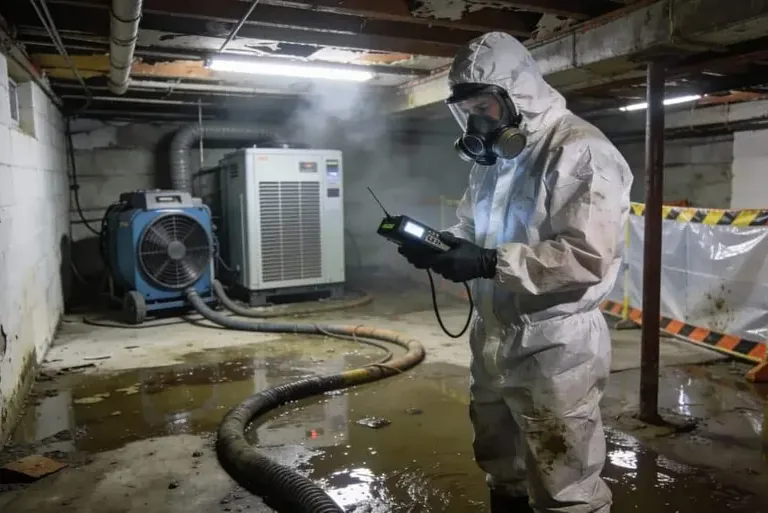
Stanley's wastewater collection report warns that grease blockages can cause wastewater to back up inside homes and damage property. It advises households against putting grease or oil into drains or garbage disposals. When sewage appears indoors, the immediate concern is keeping people away from the affected area and arranging source inspection. A clear description of the fixtures involved helps the repair professional, while a protected cleanup plan addresses the materials the wastewater touched.
Key takeaways
- Occupants should stop using affected fixtures and avoid contact with wastewater.
- The first report should identify which fixtures reacted and in what order.
- Drain repair and the cleaning of affected building materials require distinct work records.
- Dry rooms need protection from wet debris, equipment and household traffic through the cleanup area.
Report the fixture sequence clearly
A sink that drains slowly, a toilet that rises and wastewater appearing at another fixture are different observations. The owner should tell the repair professional which happened first and whether another fixture was being used.
A concise sequence is more useful than assuming the location of a blockage before inspection.
Once wastewater appears, further use of affected fixtures should stop while the source is evaluated. Occupants should avoid walking through the wet area or trying to reach a drain hidden beneath contaminated water.
The first account can be given from a dry position, with children and pets kept outside the affected rooms.
The sewage backup cleanup service addresses the indoor contamination and material exposure. The plumber or other responsible source professional investigates the drainage problem.
Identifying both tasks early helps an owner coordinate the repair and the building cleanup without leaving either part unclear.
- Name the fixture where the first change appeared.
- Describe other fixtures that reacted afterward.
- Report any ongoing discharge into the room.
- Keep household traffic out of the wastewater route.
Use the local grease warning in the right way
The municipal report specifically cautions households about grease and oil entering drains. For future prevention, cooking residues should be handled through an appropriate disposal method instead of poured into a sink or garbage disposal.
The owner can reconsider household habits after the immediate loss has been controlled and the source inspected.
The Town of Stanley Public Works Department operates and maintains the municipal wastewater collection system, which transports wastewater to the Two Rivers wastewater treatment plant. A property owner reporting a problem should provide the observed symptoms and follow the direction appropriate to the affected service.
Repair findings should identify the system component involved.
The published wastewater report also discusses grease controls for cooking establishments. A business with a backup should keep its relevant maintenance records available for the source professional.
Those records can accompany the fixture observations, giving the inspection a clearer account of recent operation and maintenance at the premises.
- Keep grease and oil out of household drains.
- Retain the source professional's findings after inspection.
- Provide relevant maintenance records for a cooking establishment.
- Record the contact handling the affected drainage system.
Keep the contaminated path out of dry rooms
Sewage can cross the visible room boundary on shoes, boxes or tools. A cleanup crew should establish a work zone and a controlled carry route before moving affected contents.
The arrangement should make it obvious where occupants can walk and where protective handling is required during material removal.
A bathroom opening onto a hallway needs particular attention to that connecting path. Household use of the corridor may need to change while cleanup proceeds.
An owner can identify alternative access for bedrooms or other occupied rooms so the crew can plan around the household's practical needs.
Dry belongings should be protected from contact with wet packaging and contaminated debris. If an item must be moved, its original position and observed exposure should remain identifiable in the contents record.
This lets later decisions about cleaning or disposal refer to the item's actual condition at discovery.
- Identify a protected route for removing affected material.
- Keep clean storage separate from the cleanup staging area.
- Label moved contents before their original position is lost.
- Avoid using household fans across untreated wastewater.
Inspect the surfaces wastewater reached
The visible puddle gives the inspection a starting point, but wastewater can travel beneath trim and along flooring edges. Technicians should assess the affected layers and document where access is needed.
An opening or removal decision should connect to a specific material and exposure rather than a general room label.
The water extraction response recovers accessible liquid as part of a controlled cleanup. Contaminated porous material may require removal, while suitable hard surfaces need appropriate cleaning.
The report should identify which action applies at each location so the homeowner can follow the scope of work.
Rooms used for cooking or storage may contain items requiring evaluation beyond the floor finish. The owner should report contact with food storage, packaging or utensils to the responsible cleanup professional.
Keeping those items apart from dry contents helps prevent them from returning to use before their condition is addressed.

Dry retained assemblies after the cleaning work
After affected material decisions and cleaning, the retained assembly can be evaluated for drying. Framing, wall bases and flooring layers may hold moisture even when the room looks cleaner.
The crew should establish measurement locations that remain available for comparison as work proceeds and temporary protection changes.
The structural drying service tracks those materials during air movement and moisture control. Equipment belongs within the planned work arrangement so it serves the cleaned assembly.
The owner should receive practical instructions about keeping the area accessible and reporting any renewed wastewater discharge.
Progress is easier to understand when cleaning completion and drying measurements have separate entries. A treated surface can still be wet, and a dry looking surface can still require a contamination decision.
The record should make each task visible so the repair contractor receives a clear account of what has been completed.
Retain a usable drain and cleanup history
The closing file should include the reported fixture sequence, the inspected cause and the source repair performed. It should also list materials removed, surfaces treated and moisture work completed.
Each document should identify the room or system involved so an owner can follow the loss from discovery through repair preparation.
For a business in the Main Street setting, a manager may need to coordinate the source professional, building owner and contents decisions. A single contact list helps preserve those roles after the urgent work ends.
The final remaining work list can then identify which party handles finish replacement or another unresolved building task.
Households can keep the grease warning with their maintenance notes and retain the repair findings for future service visits. If another fixture problem appears, the new symptoms should be recorded in their own sequence.
Comparing the reports gives the next professional useful history while keeping the current inspection focused on the present condition.
Questions
What does Stanley's wastewater report say about grease?
It warns that grease blockages can lead to wastewater backing up inside homes. The household advice is to keep grease and oil out of drains and garbage disposals.
Should a toilet be flushed again to test a backup?
Further use of affected fixtures should stop while a professional evaluates the problem. The owner can instead describe the earlier fixture behavior and any continued discharge from a safe location.
Why is a separate carry route needed?
Wet debris and equipment can transfer contamination through otherwise dry rooms. A controlled route helps the crew contain material movement and gives occupants a clear area to avoid.
Does a cleared drain finish the restoration work?
The affected building surfaces and contents still need evaluation. The cleanup record should cover contamination treatment and moisture condition as well as the source repair completed by the responsible professional.