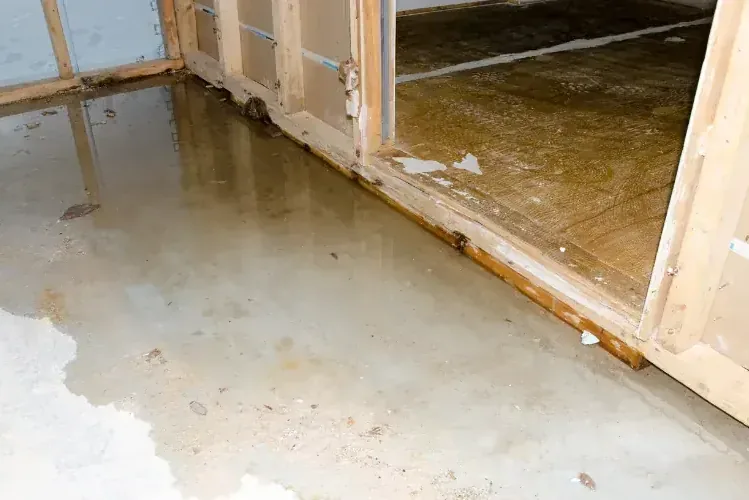
Cornelius has different drainage directions across town: the west side drains toward Lake Norman, while the east side drains toward the Rocky River. When rainwater reaches a home, the immediate question is where it crossed the building boundary. A wet threshold, a low wall opening and a drip from overhead each lead to a different inspection. A useful cleanup plan begins at that opening and follows the water through the rooms it reached.
Key takeaways
- Photographs from a dry position should show the opening and the first affected interior surface.
- Occupants should keep clear of outdoor water, wet electrical equipment and unstable finishes.
- A room sketch should include wet edges behind furniture and at adjoining doorways.
- Extraction, material cleaning and drying need separate entries in the work record.
Start at the building boundary
The first visible puddle may sit away from the opening that admitted it. A threshold can feed water beneath a floor covering before a wet patch appears across the room, so the inspection follows edges as well as open floor space.
An owner can describe the earliest observation from a safe, dry location.
On the western side of town, the lake is part of the surrounding drainage setting. Across the eastern side, water drains toward the river system.
For an individual house, photographs of the door sill, wall base and nearby ground give the cleanup team a starting point that can be matched to indoor observations.
The storm water cleanup page explains the response to outside water inside a building. Before equipment enters, the team needs a usable entrance and a description of any continuing inflow.
A homeowner should report whether the visible wet area is growing, holding steady or receding.
- Record the first room where water appeared.
- Describe the opening without entering the flooded area.
- Note whether water remains against the outside wall.
- Preserve photographs of wet thresholds before cleanup.
Make a record while conditions change
Rain can stop while moisture remains hidden beneath a floor. A short sequence of observations helps connect the changing outdoor conditions to the indoor loss: the first drip, the spreading floor edge and the point when the flow slowed all belong in the same account.
Approximate timing should be labelled honestly.
A wide room photograph shows the relationship between the wet entrance and furniture. A closer view can capture a stained baseboard, swollen cabinet edge or debris left on a hard surface.
Keeping both views makes later comparisons easier when contents have moved and the original puddle has been extracted.
The local library on Catawba Avenue provides a familiar town landmark, but the work record needs the affected property's own room names and access instructions. A kitchen doorway or rear sitting room is more useful for tracking an indoor boundary than a broad description of the surrounding area.
- Keep original image files together.
- Use consistent room names in notes and photographs.
- Separate observations made during rainfall from those made afterward.
- Identify contents moved before the cleanup visit.
Keep occupied space apart from the wet route
An entrance used by water may also be the entrance a household normally uses. Until access is assessed, people and pets need a dry route that avoids the affected floor.
Wet cords, appliances and outlets require qualified attention; occupants should not cross water to reach a switch or shutoff.
A cleanup route also needs room for hoses, protected equipment and removed materials. Moving wet boxes through an untouched bedroom can spread the problem into a second space.
The team can identify a staging area before moving contents, then keep the wet carry path distinct from household movement.
Outdoor water can carry debris into finishes and furnishings. An owner should describe visible sediment, odors and the surfaces touched without attempting to handle contaminated material.
Those observations help the crew prepare the work area and select cleaning methods before air movement begins.
- Keep children away from the affected entrance.
- Leave wet electrical items undisturbed.
- Set aside a dry route for household access.
- Tell the crew where wet contents were originally stored.
Follow the floor into adjoining assemblies
Once safe access is established, technicians compare the visible water boundary with measurements at floor transitions and wall bases. Moisture can remain at the edge of a room after the center looks clear.
A useful sketch marks the material at each location so later readings refer to the same assembly.
The water extraction process addresses accessible liquid, including collection points behind movable contents. The inspection also considers layers beneath the surface where water traveled.
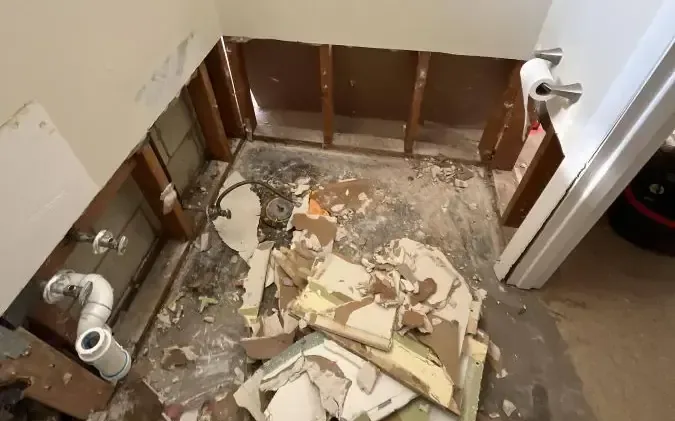
Decisions about lifting a floor covering or opening a wall depend on the material, the exposure and the access needed for cleanup.
A hallway joining several rooms deserves its own measurements. Water may cross a doorway in a narrow path and collect in a lower spot farther inside.
Checking that connecting route helps keep the drying plan tied to the actual spread rather than stopping at the most obvious wet room.
Separate cleaning from the drying decision
Removing standing water changes how a room looks immediately, but the retained materials still need evaluation. Contaminated porous items may need removal, while suitable hard surfaces can receive cleaning appropriate to their exposure.
The work record should identify each material decision and the location where it applies.
After the cleanup work, controlled air movement and dehumidification support drying of retained assemblies. Equipment placement follows the accessible wet surfaces and the room layout.
The crew should preserve a safe exit and explain which doors need to remain in the position used for the drying setup.
A structural drying assessment tracks progress at the same labelled locations. If a concealed edge remains wet while open surfaces improve, the team can reassess access or the equipment arrangement.
The homeowner benefits from seeing which materials are responding and which still need attention.
Close the file with the entry point and the repair need
The final record should connect the opening, the room boundary and the work completed. Photographs taken from the original viewpoints help show changes after extraction and cleaning.
The list of retained materials belongs beside the drying measurements, making the basis for the repair handoff easy to follow.
Exterior source work may involve a doorway, roof discharge or another inspected feature. The responsible trade should describe that repair separately from interior restoration.
This gives the owner a clear list of completed work and any remaining building tasks before finishes conceal the affected assembly again.
Before the next rain, the owner can keep vulnerable belongings away from the previous wet edge and retain the inspection notes for comparison. If water appears again, a fresh observation record should identify the new opening and spread.
That comparison gives the repair professional practical details for the next visit.
Questions
Which directions does Cornelius drain?
The town's western side drains toward Lake Norman, and its eastern side drains toward the Rocky River. An indoor cleanup begins with the opening where water entered the particular building.
What should an owner photograph first?
A safe view showing the affected entrance and nearby floor is useful before furniture or equipment changes the room. Close views of marks and debris can follow when access permits.
Can a dry looking doorway still need checking?
Yes. Moisture testing can reveal affected material beneath a threshold or along a concealed edge after exposed water disappears. The inspection should follow the suspected route into the adjoining room.
What belongs in the final handoff?
The owner should receive a readable account of source observations, material treatment and final moisture checks, together with the remaining repair tasks. Room labels should match throughout the file.